

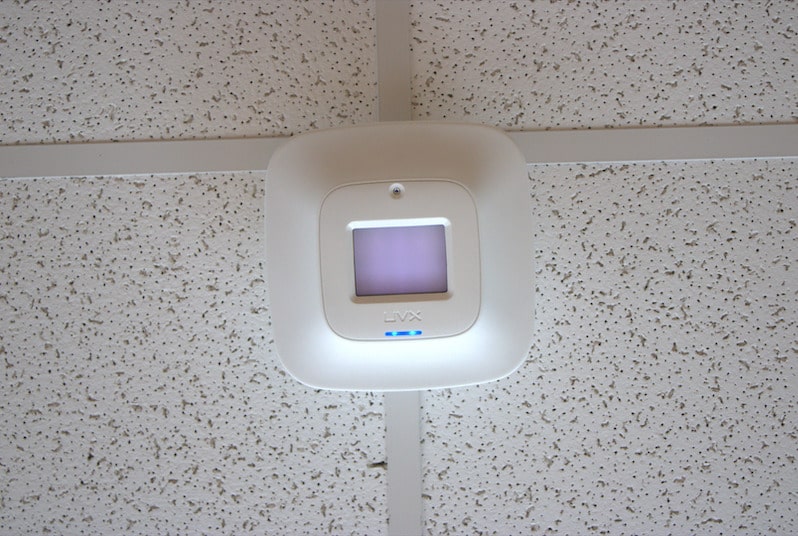
Research Nova Scotia is investing an additional $1.1 million to test whether UV lights installed in long-term care (LTC) facilities will reduce respiratory viral infections (RVI) infections among LTC residents.
“The foundational work completed as part of a pandemic response has established Nova Scotia as a leader in this area of research world-wide,” says Stefan Leslie, CEO of Research Nova Scotia. “We now have access to better UV technology and have an updated understanding on how to ensure that it is completely safe. We are leveraging new information to expand our research into the role far-UVC can play in preventing infections in long-term care.”
Nova Scotia has the highest proportion of seniors in Canada. Elderly people who have multiple health problems are at higher risk of illness from RVIs. This is especially true for residents in LTC because the usual methods of infection control are sometimes difficult to manage and often residents do not show typical symptoms of infection, like fever.
Quick Facts:
• In 2021, Research Nova Scotia invested $1.7 million in Dr. Rockwood’s clinical trial, one of 23 COVID-related research projects funded since 2020.
• Provincial funding for the project was allocated from the 50-million contribution to the Nova Scotia COVID-19 Response Council
• This research project is designed by Nova Scotia Health
• Phase 1 participating sites included Northwood’s Halifax Campus and Windsor Elms Village in Falmouth
• Phase 2 participating sites include Northwood’s Halifax Campus, Windsor Elms Village in Falmouth, and The Cove Guest Home in Sydney, Cape Breton
This study is testing whether a safe form of ultraviolet light can be effective as an extra method of disinfection, in additional to manual cleaning, against airborne and surface viruses that can cause respiratory infections.
“In 2020 we began to develop a clinical trial of whether whole room, direct exposure of far-UVC light helps to prevent the spread of COVID-19,” says Dr. Kenneth Rockwood of Nova Scotia Health, and the lead researcher on the project. “While vaccines effectively mitigated the spread of early SARS-CoV-2 variants, there is uncertainty surrounding future variants, and we remain concerned about all RVIs which are the cause of significant harm and reduced quality of life for LTC residents.”
Recent laboratory and simulation-based research shows that not only do far-UVC lamps significantly reduce the levels of airborne pathogens following single exposures, but the levels are also reduced even when infectious people remain present.
“This exciting research is helping us improve infection prevention and control strategies in our long-term care facilities and will enhance experiences of care for our residents and their families and caregivers,” says Dr. Gail Tomblin Murphy, Vice President of Research, Innovation and Discovery and Chief Nurse Executive at Nova Scotia Health. “The innovative nature of this work is a great example of how Nova Scotia is positioned to be a leader in the space of cutting-edge research on innovations, innovative technologies, and models of care in Canada and internationally. We are grateful for the contributions of Dr. Rockwood, who has made significant contributions as a world-leading researcher, innovator and as a clinician to enhance care and access for older adults in Nova Scotia.”
Dr. Rockwood and his research team hope to determine if this technology can serve as an effective infection control strategy in LTC. This next phase of the research uses the latest in UV technology and has added a third LTC site. Not just a technology design experiment, this research has engaged with the LTC facilities and staff, residents, caregivers, and families from the beginning. This is novel and ground-breaking research on a priority population in the province, nationally, and internationally. nH