

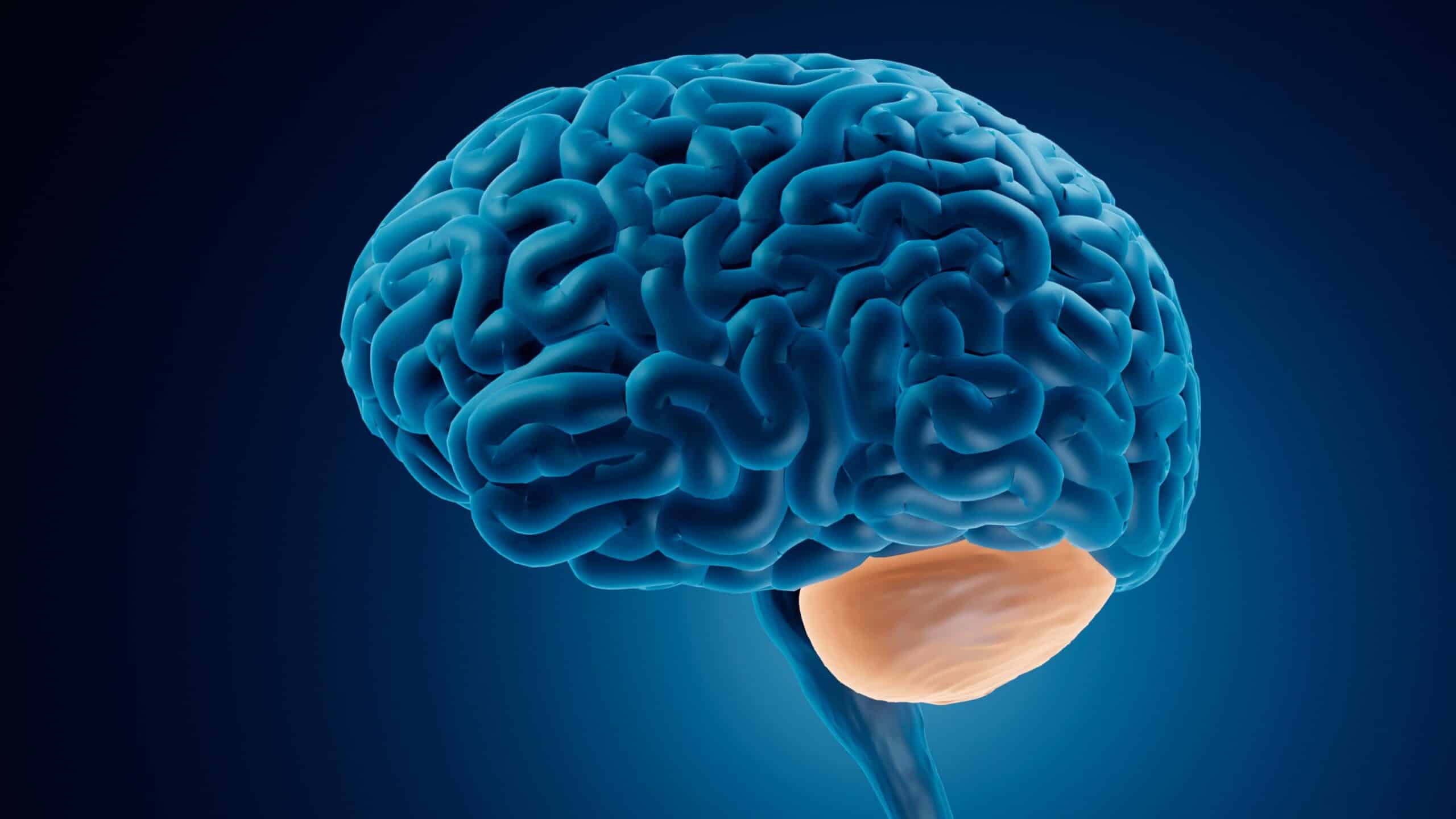
The cerebellum, typically associated with movement, may also play a key role in reading and spelling — which could help us better understand disorders like dyslexia.
The cerebellum, a part of the brain traditionally associated with balance and movement, is also important for more complex tasks like reading and spelling, a University of Alberta study suggests.
Researchers took brain scans of 33 adults while they performed spelling tasks involving sound-based processing, memory-based retrieval of words, or both. Participants included typical readers and people with reading impairments such as dyslexia. Researchers then examined how different brain regions synchronized and worked together during the experiments.
The analysis revealed that the cerebellum showed strong connectivity with the brain’s language regions — signalling its active role in carrying out spelling tasks. The cerebellum’s involvement also varied depending on the type of task, showing it’s dynamic enough to support different linguistic processes.
As well, though some participants had more difficulty than others with their tasks, the brain connections looked similar in everyone, suggesting the cerebellum plays a fundamental role regardless of a person’s reading ability.
The findings could improve dyslexia research and literacy therapies, says Jacqueline Cummine, a professor in the Faculty of Rehabilitation Medicine who co-led the study.
“Understanding how the cerebellum participates in spelling may help develop more accurate brain-based models of dyslexia, which can give clearer insight into why some people struggle with these skills,” she notes. “And interventions could be designed to strengthen these brain networks through approaches such as targeted reading practice.”
BY BEV BETKOWSKI