
 will operate out of St. Michael's Hospital to provide peer support to trauma survivors.)
By Kelly O’Brien
After she was hit by a garbage truck in 2012, doctors told Margaret Harvey’s husband she had only a 30 per cent chance of survival.
Harvey pulled through, but the road to a full recovery would prove long and difficult, both physically and emotionally.
After being treated for a few weeks at St. Michael’s Hospital, she was transferred to another hospital, and then a private retirement home to complete her rehabilitation. When she returned home, she realized how much her trauma had changed her life.
“I thought that when I went home, I would be better, but I wasn’t, and it took me a while to realize that things were just beginning,” she says.
She tried to go back to work, at the Terry Fox Foundation, but she said even one day a week was too much for her, so she was forced to take medical leave. It was then that she discovered the Trauma Survivor Network.
“I felt so alone, and I thought, who has been through this? I need to talk to somebody so I can know how this is going to end for me,” she says. “I couldn’t sleep and I was up all night, so I went online and found it, and I thought, this is exactly what I need.”
However, there was no Trauma Survivor Network branch in Canada. She approached St. Michael’s Hospital with the idea of establishing a group to connect outpatient trauma survivors with support services.
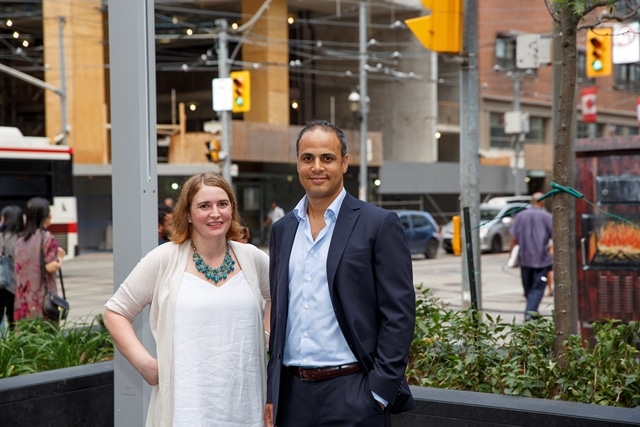
The group, called My BeST (Beyond Surviving to Thriving), is being organized by Harvey and Amanda MacFarlan, a trauma registry manager and quality improvement specialist at St. Michael’s, along with a committee including social workers, trauma surgeons, psychiatrists, physiotherapists, patient experience advisers and spiritual care providers.
The group will help trauma survivors manage the psychological and social impact of their injuries.
“You can fix bones and you can fix muscles, but you also need to treat minds, and you need to respect that when someone goes through a physical trauma, their whole life could change on a dime,” says Harvey. “How are you going to deal with that?”
How people deal with trauma is determined by a number of different factors, Harvey said. She was lucky to have the resources necessary to seek out the treatment she needed. My BeST aims to help people who don’t have access those resources on their own.
“I was so lucky that I had a home, money, kids, people around me, I had lots of support,” she says. “But a lot of people don’t have any of that, and trauma has very real impacts on peoples’ mental health, so it’s something that needs to be addressed.”
Harvey said she wants people to understand that post-traumatic growth is possible.
“People go through trauma every day, and they can move past it, but first they need to address it,” she says. “If we offer the help and people seek the help, they can improve, they’re not doomed to have post-traumatic stress disorder forever. You can move on from that.”
Kelly O’Brien works in communications at St. Michael’s Hospital.