

By Roxanne Hathway-Baxter & Michael Oreskovich
Hospital patients with existing health conditions face a greater risk of being seriously affected by influenza (the flu) than otherwise healthy individuals. This is especially true at Runnymede Healthcare Centre, where the majority of patients are seniors suffering from medically complex conditions, and are therefore more vulnerable to infection. Runnymede proactively addresses this risk with an annual flu campaign that promotes vaccinations for all patients, staff and volunteers. The success of the hospital’s campaign has grown each year and has helped distinguish Runnymede as a leader in infection prevention among its peers in the Greater Toronto Area (GTA).
In the 2015/2016 flu season, Toronto Public Health reported that the average staff vaccination rate among acute care and complex continuing care/rehab hospitals in the city was 56.2 per cent, despite the fact that the Government of Ontario cites the flu vaccine as the best defence against the flu. Why such a low number? Reasons vary. Some individuals are skeptical of the safety and effectiveness of the shot, while other reasons boil down to logistics and convenient access to the vaccine.
Runnymede soared above this rate in the same flu season, with a staff vaccination rate of 83 per cent, placing it second among its peer hospitals in Toronto. However, more impressively, at the midpoint of the 2016/2017 flu season, the hospital’s staff vaccination rate is currently sitting at an outstanding 92 per cent.
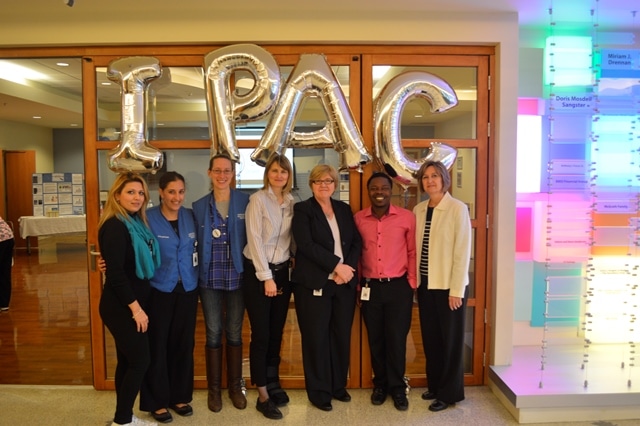
The hospital’s flu campaign can be credited with the high rates of vaccination at Runnymede. The campaign is launched early in the flu season, and this year it was tied in with the annual Infection Prevention and Control (IPAC) Week in October 2016. The campaign is organized by a team of employees, led by occupational health and safety and human resources, with support from infection control. The aim of the team is to mitigate the challenges that prevent healthcare employees from getting vaccinated and meet the hospital’s vaccination targets.
“We realized that we had to do more than just tell staff and volunteers to ‘get your flu shot.’ We weren’t going to reach immunization targets that way,” says Richard Mendonca, VP of Human Resources and Organizational Development. “We had to educate staff on what the flu really is and why it is so important for our patients that they get the vaccine. We did this by providing easy access to information on the flu shot, and by providing them with ongoing opportunities to get the vaccine.”
In the weeks after the launch, the team continues to promote the flu campaign and increase its visibility in a variety of ways. Hospital-wide messaging pops up through email, intranet and bulletin boards, but there is also a more hands-on approach to reaching all staff – a mobile flu shot cart.
The mobile flu shot cart, led by the occupational health department, can be dispatched to specific areas of the hospital, with staff being notified in advance of its presence. “The mobile flu cart has seen every corner of the hospital,” says Michael Ampem, occupational health practitioner. “We take the cart right to where staff members are, and with the cart we bring educational resources that can help alleviate any concerns that staff members might have about the vaccine, promoting a more positive attitude towards it.” Having the cart in addition to the regular availability of the vaccine in the occupational health department makes it easy and convenient for staff to get their flu shots, pushing vaccination rates higher and higher.
Throughout the course of the campaign, up-to-date vaccination records are kept by the occupational health department. The rates are regularly reviewed by the team to analyze the hospital’s progress and if there is a department with a low participation rate, the team tailors additional education and increases mobile flu shot cart access for staff in that department.
Runnymede’s continual commitment to its annual flu shot campaign is a demonstration of how seriously it takes the health of its patients, staff, volunteers and visitors. “The decision to bring both education and the flu shot directly to staff has really had a big impact on this year’s campaign,” says Ampem. “The fact that such a high number of our staff have rolled up their sleeves to get the vaccine really highlights the dedication to patient safety that exists at Runnymede.”
Roxanne Hathway-Baxter & Michael Oreskovich are Communication Specialists at Runnymede Healthcare Centre.